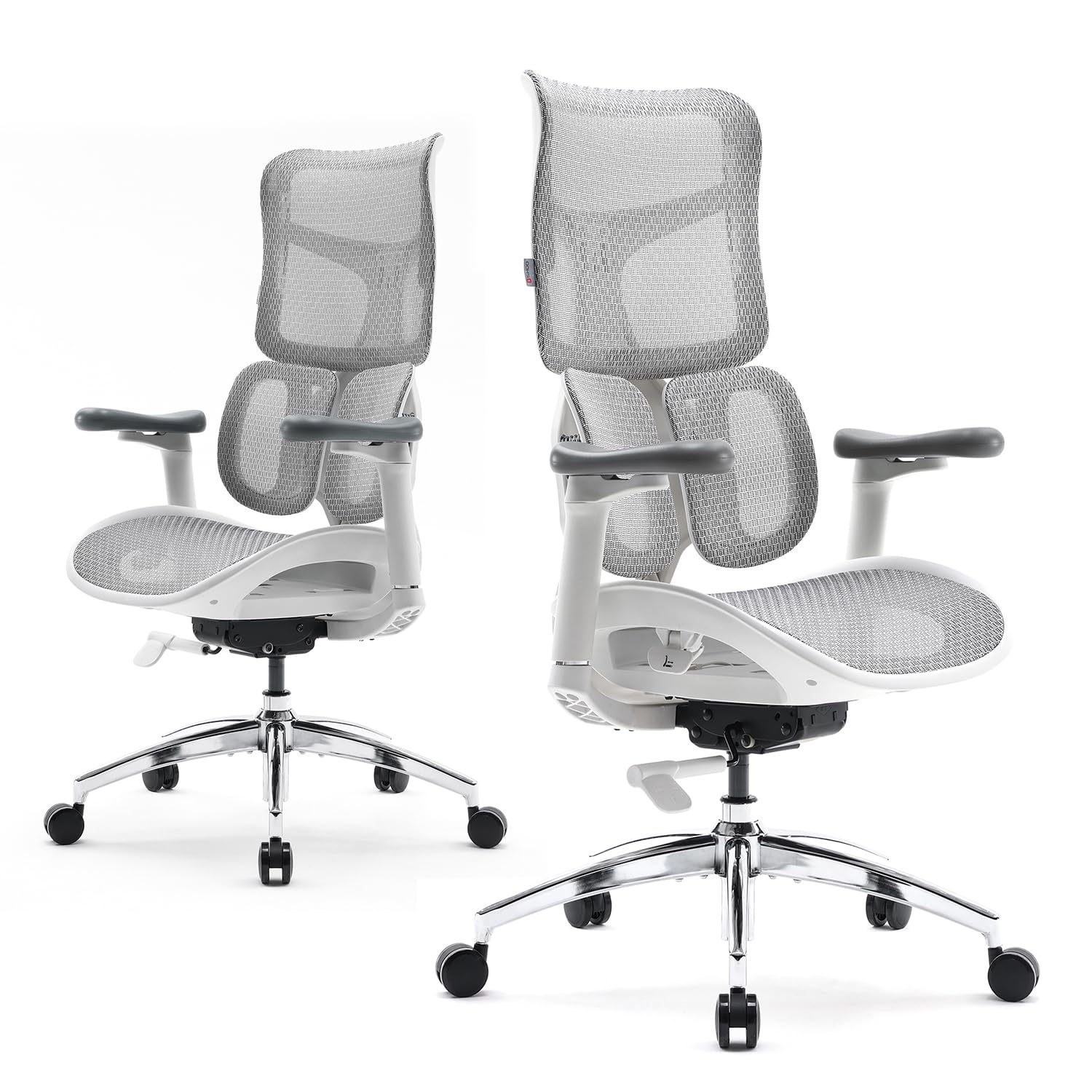
The SIHOO Doro S100 pairs a spring-assisted dual lumbar system with a backrest and armrests designed to move with your posture.
This sihoo s100 chair review looks at what those adjustments offer and which buyers may want a simpler chair.
Doro S100 Review Summary
The quick verdict
100+ ratings
Read Amazon ReviewsSIHOO Doro S100
A mesh office chair for desk workers who want adaptive lumbar support, coordinated armrests, and several ways to adjust the back and seat.
- Dual dynamic lumbar support uses four springs and a 6D adaptive mechanism to adjust with posture and body shape.
- The independently adjustable upper backrest offers five height positions; the described fit range is 5 feet to 6 feet 3 inches.
- Four-direction armrests adjust up to 2.76 inches vertically, 1.18 inches forward or back, and 72 degrees inward or outward, and coordinate with the backrest when reclining.
- Seat depth adjusts across a 1.97-inch range, and the cushion has a waterfall-shaped front edge.

Pros
- Multiple lumbar adjustments are designed to follow changes in posture.
- The independent upper-back adjustment gives more scope to position shoulder and neck support.
Consider before buying
- The described height range is a broad guide, so buyers should check whether the seat and backrest dimensions suit their own proportions.
- A maximum recline angle alone does not tell you which positions lock or how recline resistance is controlled.
Read the full review summary
The Doro S100 is built around adjustability. Its dual dynamic lumbar support uses four springs and a described 6D adaptive mechanism, while the upper backrest can be set to five positions.
A 2-inch seat-depth range, mesh back, and armrests that coordinate with reclining give buyers several ways to tune the chair to their working posture.
That combination may suit people who spend substantial time at a desk and want more back and arm positioning options than a basic task chair provides.
The tradeoff is that fit depends on whether the adjustments land comfortably for your body and workstation; the description gives a suggested height span, but does not specify seat width, overall dimensions, or recline lock positions.
The buying factors
Doro S100 Scorecard
Editorial scores reflect listed features and buyer fit; they are not laboratory measurements or customer ratings.
Lumbar adjustability
The dual dynamic support uses four springs and a 6D adaptive mechanism intended to respond to different postures.
Armrest flexibility
The padded armrests adjust vertically, forward and back, and inward or outward, and coordinate with recline.
Backrest fit
The upper backrest offers five positions, with the design described for users from 5 feet to 6 feet 3 inches.
Seat positioning
A 2-inch seat-depth adjustment and waterfall-shaped cushion provide useful ways to tune thigh support.
Breathable materials
The back uses high-resilience mesh, which may appeal to buyers who prefer a mesh-backed chair.
Recline range
The maximum recline is described as 135 degrees, though the available lock positions and tension controls are not specified.
Key Features and Specifications of Doro S100
- Dual dynamic lumbar support uses four springs and a 6D adaptive mechanism to adjust with posture and body shape.
- The independently adjustable upper backrest offers five height positions; the described fit range is 5 feet to 6 feet 3 inches.
- Four-direction armrests adjust up to 2.76 inches vertically, 1.18 inches forward or back, and 72 degrees inward or outward, and coordinate with the backrest when reclining.
- Seat depth adjusts across a 1.97-inch range, and the cushion has a waterfall-shaped front edge.
- The backrest is made with high-resilience mesh fabric.
- The chair's maximum recline angle is 135 degrees.
Pros and Cons of Doro S100
Pros
- Multiple lumbar adjustments are designed to follow changes in posture.
- The independent upper-back adjustment gives more scope to position shoulder and neck support.
- Armrests can be positioned in several directions and move in coordination with recline.
- Adjustable seat depth helps accommodate different leg lengths and sitting positions.
Consider before buying
- The described height range is a broad guide, so buyers should check whether the seat and backrest dimensions suit their own proportions.
- A maximum recline angle alone does not tell you which positions lock or how recline resistance is controlled.
- The listed adjustment range may take time to tune; buyers who prefer a simple, fixed setup may not use all of it.
Who Should Buy Doro S100?
Good fit
Consider the Doro S100 if you work at a desk for long stretches and want to adjust lumbar support, upper-back position, seat depth, and arm placement.
Its coordinated armrests and backrest are particularly relevant if you alternate between upright typing and leaning back.
Before choosing it, compare the chair's dimensions with your body and desk setup. The suggested user-height span is helpful, but it cannot confirm that the seat depth, arm height, or lumbar position will feel right for you.
If possible, prioritize a return option that lets you evaluate the fit in your own workspace.
Who should skip it
Look elsewhere if you want a chair with a clearly specified set of recline lock positions, or if you prefer a straightforward setup with fewer adjustments.
The available description gives a 135-degree maximum recline but does not detail the lock and tension controls.
This may also be a poor fit if the suggested 5-foot to 6-foot-3-inch range falls outside your height or if you already know you need specific seat dimensions that are not provided here.
How the Doro S100’s adjustments shape daily desk use
Adaptive lower-back support
The dual lumbar mechanism is the chair’s defining feature: four springs and a described 6D adjustment system are intended to adapt as posture changes.
That could be useful for people who shift between upright work and more relaxed positions, although personal fit still depends on where the support meets your lower back.
A backrest you can reposition
Five upper-backrest positions give the chair a way to accommodate different torso lengths and shoulder positions.
The suggested height span offers a starting point, but it is not a substitute for checking whether the backrest and lumbar support align comfortably with your frame.
Arm support across work and recline
The armrests move vertically, forward and back, and inward or outward; they also coordinate with the backrest during recline.
This can help buyers find a more useful arm position for desk work or leaning back, but the stated movement ranges do not confirm compatibility with a particular desk height or width.
Seat depth and recline considerations
The 1.97-inch seat-depth adjustment provides a practical fit adjustment for thigh support, while the waterfall-shaped cushion is designed to broaden contact at the front edge.
Recline reaches a stated maximum of 135 degrees, so buyers who care about locking or tension settings should confirm those details before committing.
Alternatives to Doro S100
Home Office Desk Chairs alternative
17,000+ ratings
Read Amazon ReviewsSIHOO M57
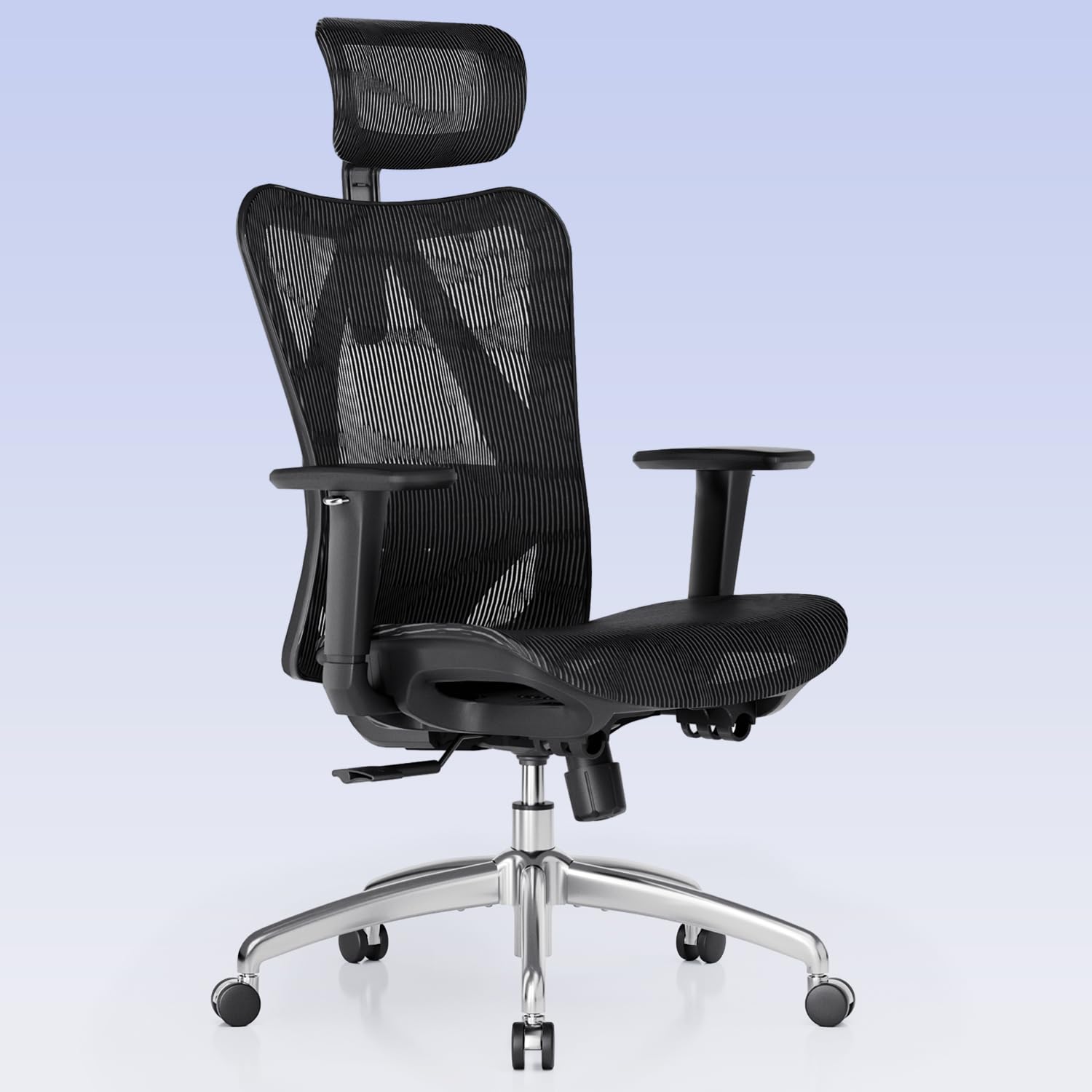
Choose the M57 if an adjustable headrest and explicitly stated weight capacity matter more to you than the Doro S100's described 6D lumbar mechanism and five-position upper backrest.
Consider the Doro if its coordinated armrests and broader stated recline maximum better match your routine.
- The M57 lists an adjustable headrest, lumbar support that changes in height and depth, a recline range from 90 to 126 degrees, and a reinforced aluminum base.
- Its description gives a 330-pound capacity.
- The Doro S100 emphasizes spring-assisted dynamic lumbar support, five upper-backrest positions, and armrests that coordinate with reclining.
Home Office Desk Chairs alternative
17,000+ ratings
Read Amazon ReviewsSIHOO B100
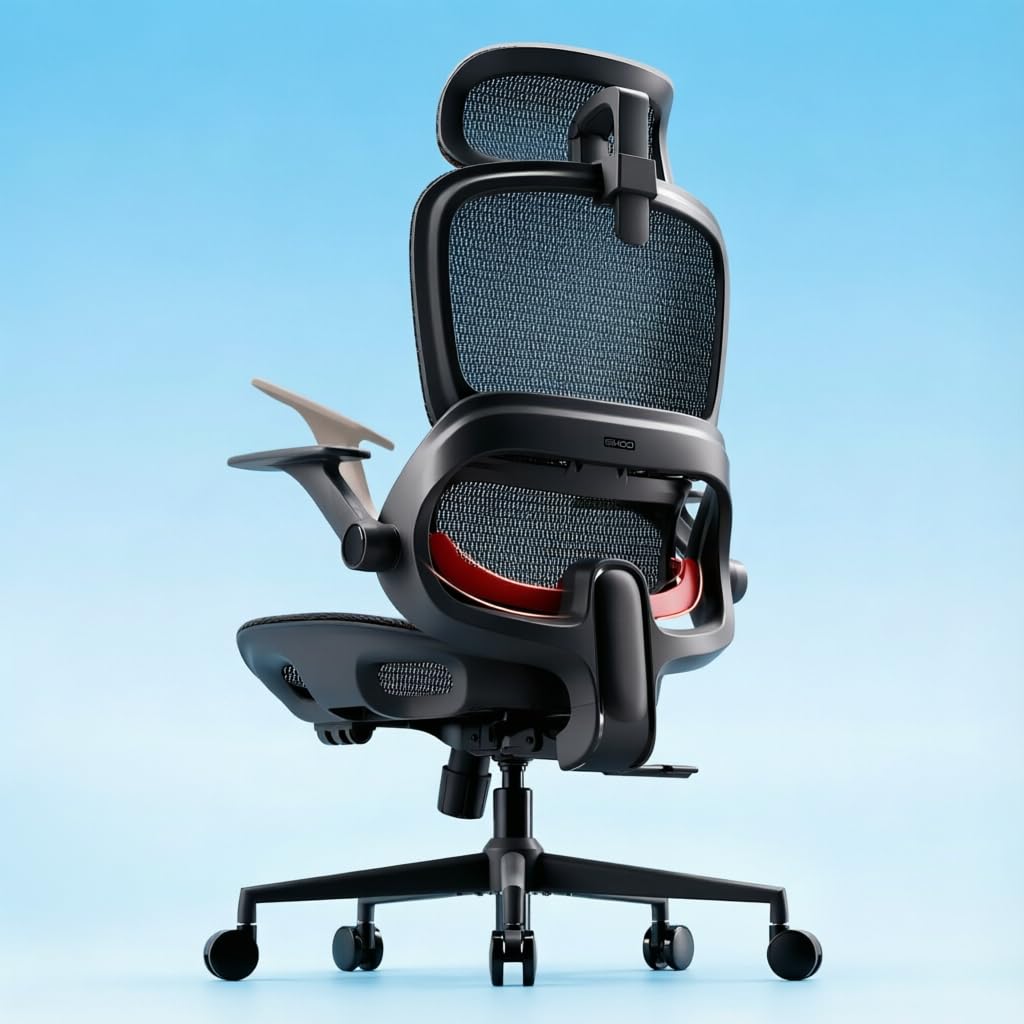
Consider the B100 if you want specified recline positions and armrests that flip up to help tuck the chair beneath a desk.
The Doro S100 may be a better match if you prioritize its independently adjustable upper backrest and more extensively described dynamic lumbar support.
- The B100 lists three recline angles—110, 125, and 135 degrees—plus a wide headrest, flip-up armrests, and a stated 300-pound capacity. Its design is described as full mesh.
- The Doro S100 offers a five-position upper backrest and multi-direction armrests that coordinate with recline.
Is Doro S100 Worth It?
The SIHOO Doro S100 is worth considering if you want a mesh-backed office chair with multiple ways to tune lumbar support, backrest height, seat depth, and arm position.
Its features point to a flexible desk-work setup, particularly for people who shift posture and want armrests that move with recline.
Treat the stated height range as a starting point and check the fit against your body and desk.
The main tradeoffs are the time needed to adjust the chair and limited detail about recline locking and overall dimensions; buyers who need those specifics should confirm them before choosing.
Your review at a glance
100+ ratings
Read Amazon ReviewsSIHOO Doro S100
A mesh office chair for desk workers who want adaptive lumbar support, coordinated armrests, and several ways to adjust the back and seat.
- Dual dynamic lumbar support uses four springs and a 6D adaptive mechanism to adjust with posture and body shape.
- The independently adjustable upper backrest offers five height positions; the described fit range is 5 feet to 6 feet 3 inches.
- Four-direction armrests adjust up to 2.76 inches vertically, 1.18 inches forward or back, and 72 degrees inward or outward, and coordinate with the backrest when reclining.
- Seat depth adjusts across a 1.97-inch range, and the cushion has a waterfall-shaped front edge.